
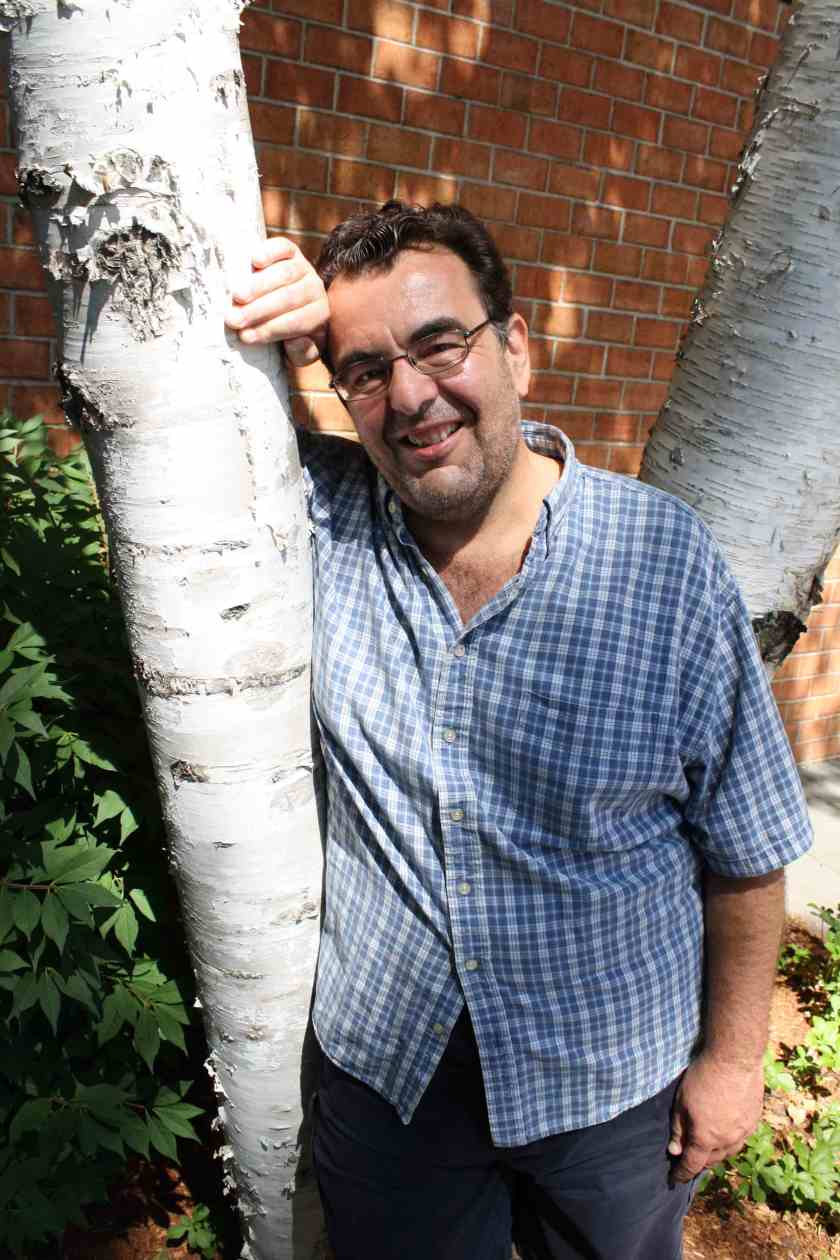
Paul Di Filippo makes his return to Analog with the story “Quest of the Sette Communi,” in our [January/February issue, on sale now!]. Catch up with Paul in this exciting Q&A, and discover why keeping up with the news is so valuable to him as a writer of speculative fiction.
Analog Editor: What is the story behind this piece?
Paul Di Filippo: I have been writing stories set in my Ribofunk universe for nearly thirty years now, and have explored so many niches of the terrain, that I seldom do up such a tale anymore. So when I have a striking idea for some new Ribofunk characters and actions, I usually leap onto it, excited by the prospect of returning to this world I enjoy.
AE: Do you particularly relate to any of the characters in this story?
PDF: Of course, although she is not my gender, the protagonist—a cunning vixen, so to speak—resonates with me for her courage, resilience and dedication.
AE: What made you think of Analog for this story?
PDF: It’s a very elaborate and recondite and subtle connection. I know for a fact—although I cannot now nail down the title of the actual story; maybe readers can help—that Jack Williamson opened a story with this mind-blowing line: “The New Jersey Turnpike was hard on the horses’ hooves.” My story echoes that opener, and once that line was in place, I thought, “Why not try this out at Analog, since the magazine in all its incarnations was always a generous home to Jack Williamson?” I fear this is the roundabout, associational way that the minds of writers operate.
AE: What is your history with Analog?
PDF: I have been reading Analog since the late Sixties, enjoying every issue. When I was able finally to place a story in the zine, I felt a kind of knighting: now I was really an SF writer!
AE: Who or what are your greatest influences and inspirations?
PDF: In 1985, just at the point where I was starting to sell my own stories, I decided that the entries in my SF library had become too many to retain in my head—I hate buying books I already own!—and so I made a little primitive database of my holdings. Of course, this list represented all my childhood reading. When I look back now at the writers with the most credits, I see names such as Heinlein, Simak, Aldiss, PKD, Poul Anderson, Andre Norton, Moorcock, Gordon Dickson, Silverberg, Sturgeon and others. These people shaped my worldview and my view of literature.
AE: How much or little do current events impact your writing?
PDF: There is no way that a competent SF writer can perform his duties without having a good grasp of the zeitgeist and current events. I read three newspapers a day in physical format, then surf the web for more news. New Scientist and Scientific American provide more theories and data than I could use in a 100 stories. And just getting out in public—talking to friends and relatives and strangers—provides valuable touchstones. All this filters into the fiction.
New Scientist and Scientific American provide more theories and data than I could use in a 100 stories. And just getting out in public—talking to friends and relatives and strangers—provides valuable touchstones. All this filters into the fiction.
AE: What is your process?
PDF: I start the day online, attending to necessary communications and such, then speding much too much time engaged in a serendipitous pursuit of knowledge (humorous dog videos count, right?). After lunch, I try to buckle down and achieve anywhere from 500-1500 words of good clean text per day. I am a “pantser” (flying by the seat of my pants) with modifications. I really like to know the ending and the start of my tale, but the stuff in the middle is a nebulous fog at first. As the old metaphor goes, “Writing is like driving by night. Your headlights reveal a small portion of the road ahead, and as you advance, more comes into view.”
AE: What inspired you to start writing?
PDF: I don’t think I have ever been not writing. When I was about seven years old, I laboriously typed up copies of a “street newspaper” and peddled them for a nickel to residents of the street. Luckly, I lived on a short dead end that had only about ten dwellings, so news accumulation was easy, and all my customers knew me! I continued writing in high school for the newspaper, then a few items in the college paper. And then it was off to the races, sendng stories out to genre editors. Somehow I knew from an early age that this was my fate.
AE: If you could choose one SFnal universe to live in, what universe would it be, and why?
PDF: I would definitely want to live in the Jack Vance-i-verse. What more colorful conditions and adventures could you imagine? Vance’s deeply humanistic and generally optimistic outlook (though he knew real evil and portrayed it, it did not generally triumph) are very appealing to me. I might have to do up a Moon Moth costume this Halloween.
AE: What are you reading right now?
PDF: I read and review three genre books a month for Locus Online. So when I want relaxation, I turn to reprint volumes of old comics. It’s a Golden Age for such wonders. Reading the gritty early adventures of Little Orphan Annie, or following Steve Canyon’s or Buz Sawyer’s exploits, or laughing at Barnaby and his fairy godfather O’Malley, or the doings of Pogo and company provide me with endless pleasures.
 The Astounding Analog Companion