
In this fascinating blog piece, Jay Werkheiser and Frank Wu discuss the historical debate surrounding the existence of Venusian moons, while also providing a scientific framework for the potential human exploration of Venus. Be sure to read their latest story, “Under the Moons of Venus: A Tale of Princess Altivolant,” in our [July/August issue, on sale now!]


Venus has two moons!
Such was the claim of Neapolitan astronomer Francesco Fontana in 1645.
Critics scoffed that Fontana’s “moons” were nothing more than tricks of the light, dioptrical ghosts produced by light bouncing back and forth between the lenses in the eye and telescope. Or perhaps stars fortuitously positioned near Venus. Or just straight-up lies.
And yet, after Fontana passed, the controversy continued. Over the next decades, several prominent astronomers reported spotting a Venusian moon or two, even Giovanni Cassini. The debate was finally put to rest, more or less, over a hundred years later during the transit of Venus across the sun in 1769. And, having sent space probes there, we now know definitively that Venus has no moons.

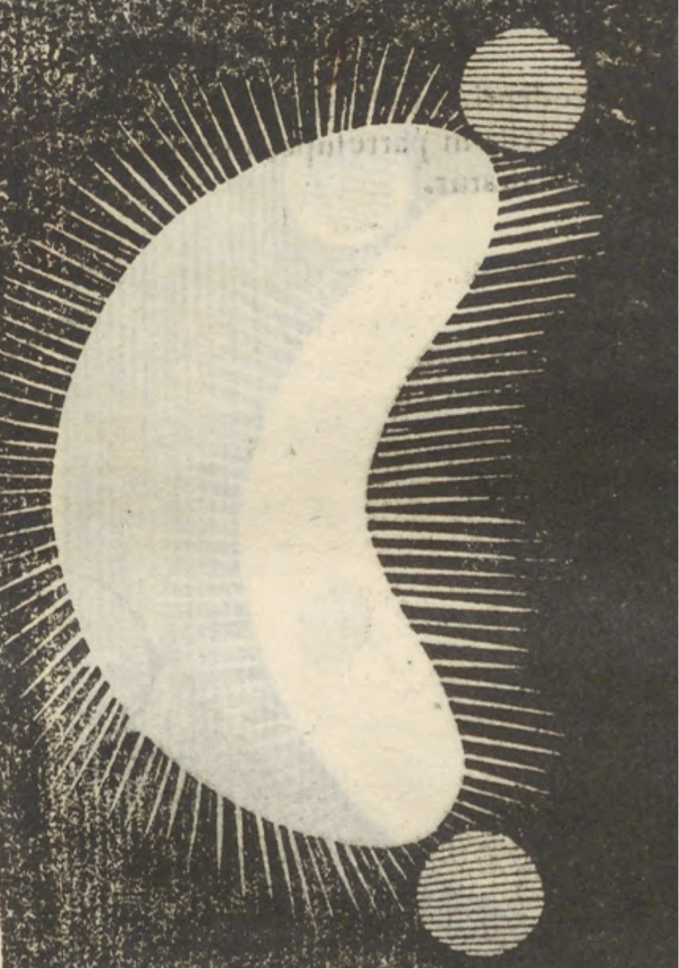
Fontana’s boner is a fun bit of scientific trivia, which we re-discovered from randomly perusing a Willy Ley article in the Sept. 1955 Galaxy magazine. But we science fiction writers couldn’t leave it at that! What if Fontana was right? What if he actually spotted real Venusian moons 400 years ago? Where did they go? What happened? And with those musings, a story was born! Something FUN and EXCITING!
The premise is fantasy, so the story should be an homage to the old planetary romances of Edgar Rice Burroughs. But you can’t take the hard science from hard science fiction writers, and so we challenged ourselves to try to stick to plausible Venusian science. Science!
The story itself flowed naturally—who wouldn’t have fun writing a pirate adventure in the cloud tops of Venus? The hard part was explaining the moons. Venus itself provided some answers . . . indirectly. It’s well known that there is an altitude band within Venus’s clouds (about 50 km/30 mi up) where the temperature and pressure are tolerable to humans. But Venus is very dry. We could solve that problem by placing the space pirates’ flying cities by a rare “wet” volcano, belching water steam high into the air.
But the atmosphere is still mostly carbon dioxide, with virtually no free oxygen. That’s a problem. Venus also lacks a strong magnetic field, which would be nice for deflecting those nasty solar wind particles.
Each moon addressed one of these issues. The big moon—they are both artificial—was placed at the L1 point, between Venus and the sun, with a powerful magnetic field generator. The smaller moon seeded the planet’s atmosphere with oxygen. That one required some handwaving, because it had to be in a stable orbit and yet skim the atmosphere in order to release the oxygen it generated. Important safety tip: don’t try to do the math for that moon, because its orbit and the volume of oxygen it produces/releases will make you twitch. It’s alien technology!
Speaking of aliens—we needed to explain how humans got to Venus in the first place. I’m not saying it was aliens . . . but it was aliens. We all know that ancient aliens built the pyramids (the History Channel told us so!), and Egyptian gods are really space aliens with magical technology. So our benevolent aliens—especially Thoth, the Egyptian space god who lived on the Earth’s Moon—rescued people from the Great Flood, transplanted them to the safety of Venusian clouds, and gave them the advanced tech they’d need to survive.
With all that worked out, the framing story fell into place. We needed a POV character who was around during the 1769 transit of Venus, but really into pseudoscience and ancient Egypt. There was an actual historical figure who would have been perfect (Athanasius Kircher), but he was born a hundred years too early for our purposes. So we invented a deluded and self-important Professor Boxhammer to fill the role. Other than Boxhammer and some Venusian pirates, everyone else mentioned in the story—including William Herschel and King (and amateur astronomer) George III of England—could have been gathered at one telescope for the 1769 transit of Venus.
Now we had: crazy science, a panoply of Egyptian gods, pirates in flying cities, the titular plucky Princess Denjira, plus a muscular-and-good-looking hero and love interest, all whipped together with a sense of wild action and adventure! What could we possibly be missing?
Monsters! In our case: cloudstalkers, giant winged gas-bag dragon-things with mouths all over their bodies, studded with teeth, their cells using the Sabatier reaction—which converts carbon dioxide to methane via a nickel catalyst—to stay afloat as they trawled for victims in the sky.
We won’t spoil all the fun and wacky things we threw into this story (did we mention the killer sky spiders? Or the gryphothopter, which is like an airplane, but shaped like a gryphon?). We hope you’ll have as much fun reading the story as we had writing it!
 The Astounding Analog Companion