
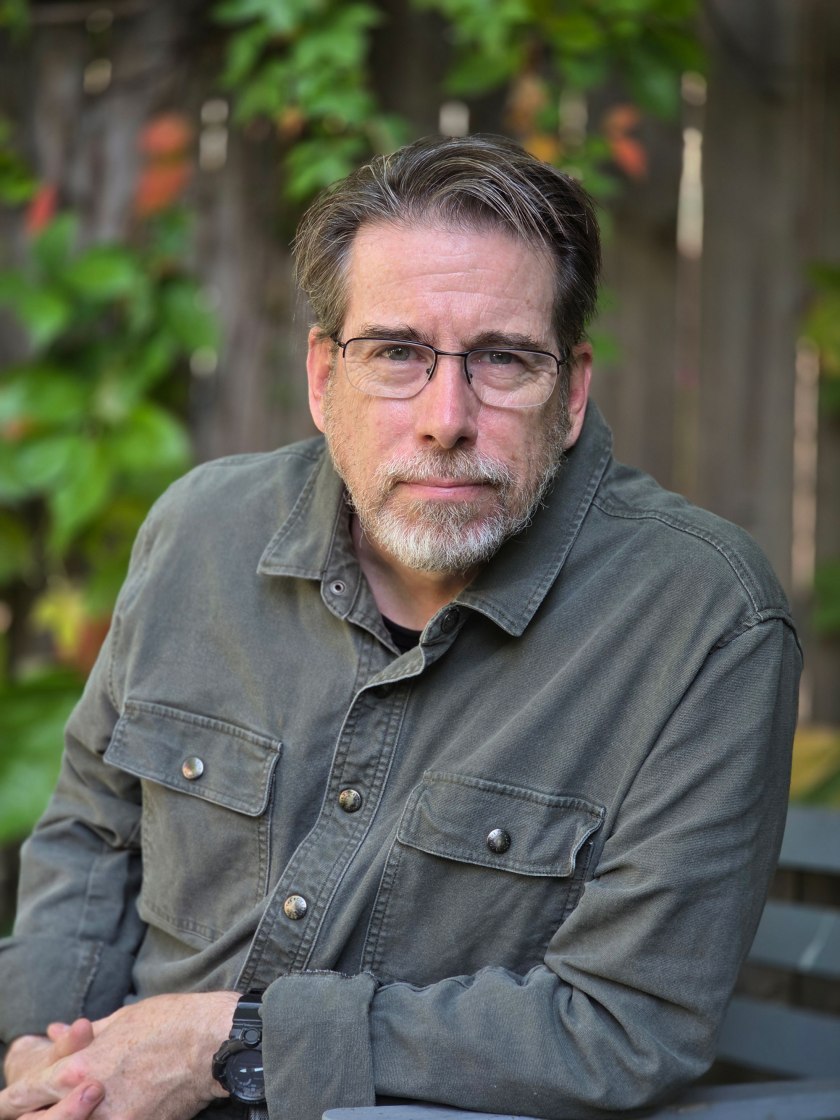
by Timothy Quinn
In this special blog post, Timothy Quinn describes the world events and scientific advancements from the last 43 years that inspired his latest story, “Scarecrow,” in our [September/October issue, on sale now!], and reminds us to never become “inoculated to the extraordinary”
I was 14 when I read Robert Forward’s Rocheworld serialized in Analog, and when you’re a teenager, even if you’re living in a staid midsize Canadian city in 1982, the world is already odd and unexpected, never mind light sails and binary planets. China has a billion people? Ozzy Osbourne snacks on bat? Wait, Spock is dead?
Forty some years later, settled into (let’s not be an asshole) middle age, the unexpected doesn’t come around quite as often, and frankly one tends to feel, like Cuttridge Funk in “Scarecrow,” a bit like a hammer looking for nails.
Pattern recognition is wired into our cerebral cortexes; it’s something we do very well. When I think of how the Earth has gotten dangerously warmer, I’m reminded of thumbing through Phoenix in my twenties on my way to Kitt Peak and feeling the Ray-Bans sticking to my face. So the writing was certainly on the wall even then. When I hear about achievements in CRISPR and mRNA, I’m reminded of the near eradication of polio (currently <1% in the wild) and smallpox (I gather there’s some leftover Tupperware in Atlanta and Koltsovo).
For those of us who’ve been around the block, it’s tough to appreciate the triumphs and tragedies when we muddy them in the ebb and flow of history. In accruing experience, we become inoculated to the extraordinary.
Fiction helps. And science fiction, by forcing us to reframe what we think we know, is even better at putting the spotlight on those things that we really ought to sit up and pay attention to.
In “Scarecrow”, a shipping container is used to perilously smuggle laborers to the moon. That grim possibility was probably inspired by the 2021 US evacuation in Afghanistan, in which a handful of people desperate to escape Kabul clung to the wings and landing gear of a C-17 and were crushed or fell to their deaths. At the time, we were all quick to recall the fall of Saigon, because of course we were.
“Scarecrow” is set in our future, but it’s a story about the past and our tendency to ignore the encroachment of extraordinary peril. To see, yet fail to act. If that resonates with you, that’s probably a good thing. I suspect that by reading about extraordinary things, it becomes a bit easier for us to recognize in the world around us those things which are equally extraordinary, unexpected or perilous. To pay better attention. To find within ourselves, not mere straw, but an agency and an urgency we thought we’d lost.
 The Astounding Analog Companion
Nice!
I’d remark that pattern recognition has become, for human minds, something of a trap. I can’t hardly look at clouds without seeing ponies!
Apophenia is the price we pay for our big, complicated brains. We’re all stuck, forever, with all the straight lines defined by any two points!
dM
LikeLike