
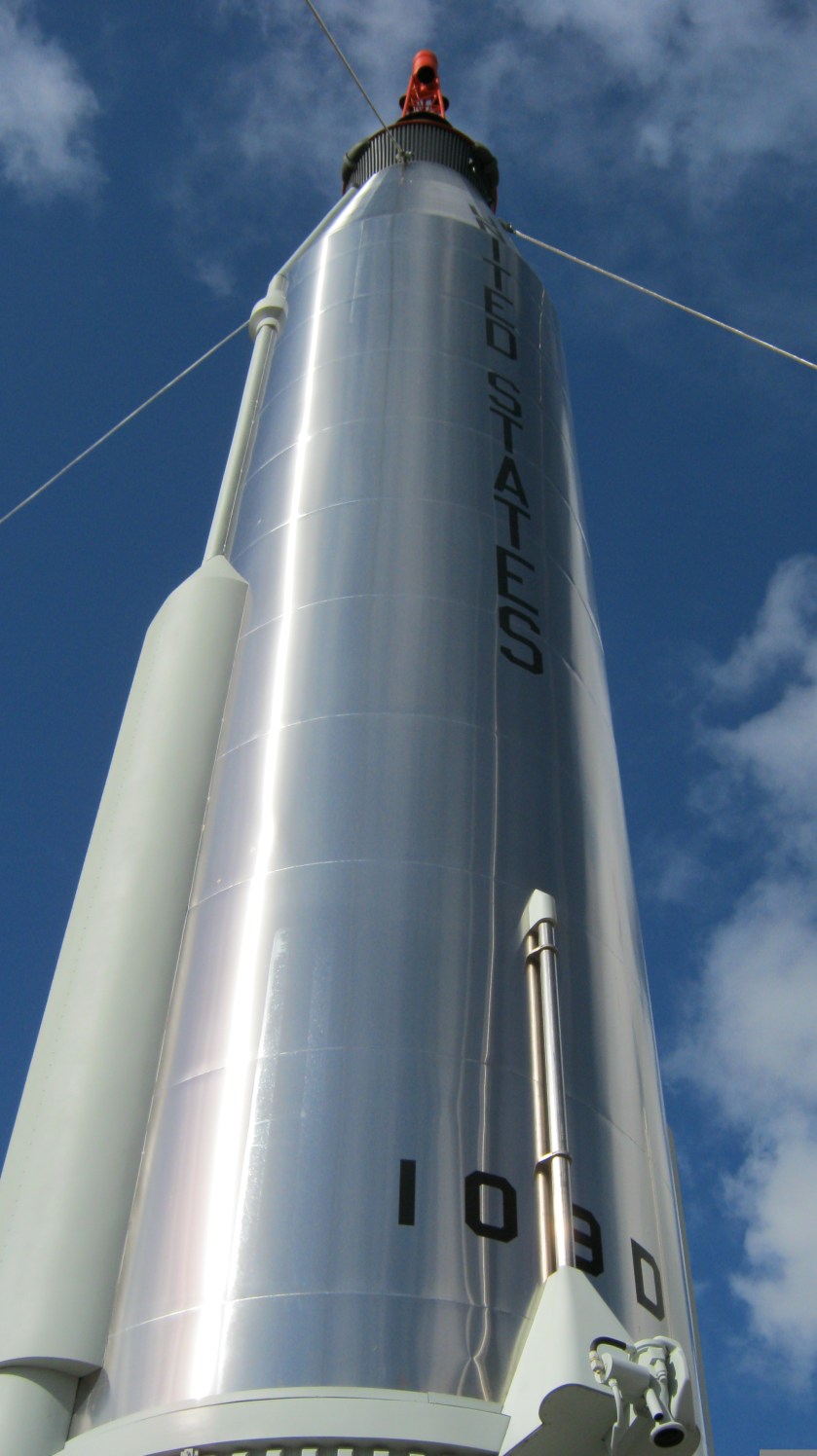
From a conversation with a sci-fi legend comes the idea for “The Cold Embrace”, in our [May/June issue, on sale now!], by C. Stuart Hardwick. Read on to learn more.
by C. Stuart Hardwick
There was a time in the early 1960s when it seemed entirely reasonable to believe that by the end of the century, humanity would be living and working throughout the Solar System. Human beings—not machines—because robots were still largely the stuff of science fiction.
Superpowers were flirting with nuclear war. They spied on one another from stratospheric balloons, or risked high-flying reconnaissance aircraft against ever more capable air defenses. The balance of power rested on a razor’s edge, and the next Pearl Harbor could mean the end of all things.
Above all this, beyond the atmosphere, lay a new domain—one that promised something more tangible than a boundless future: strategic advantage. The Soviet Union built Almaz, a crewed orbital station designed to observe the West. The United States planned the Manned Orbiting Laboratory (MOL) to return the favor. Both nations launched telescopic spy cameras into orbit and returned photographic film to Earth for processing and analysis. Both nations launched orbital radars powered by small atomic fission reactors to track the other’s fleet.
The robots were coming along, and in time, it was they that would claim the high ground of space and reconnoiter the Solar System while our colonial dreams foundered on shoals of economic reality. But in those early days, when computers were still people and programs were often little more than fancy electromechanical clockworks, a crew was required to do any real work, from dodging lunar craters to changing the film in a spy camera.
And so it was that Pentagon planners took up the concept of man-in-the-loop satellite inspection.
Astronauts would launch into orbit, separate from their booster, and sidle up to those Russkie Sputniks to take pictures, listen to transmissions—perhaps even take a souvenir or leave behind a surprise. The Gemini capsule could be launched inconspicuously and could maneuver and support an EVA. Apollo, in many ways, was better still. A modified Apollo atop a Saturn I could launch under a plausible cover story, adjust its orbit once in space, and dispatch a stripped-down lunar module to conduct a precise and clandestine intercept.
That was the idea, anyway.
And what an idea!
I’m fortunate to have learned of it from sci-fi legend, Jerry Pournelle, who I had the pleasure of chatting with shortly before his death. And it’s a good thing I did, too. As a well-connected aerospace and defense analyst during that era, Jerry was in the room when many such ideas born of Cold War paranoia were discussed and discarded without progressing into the history books. This is one of two I got from that meeting that eventually inspired stories that sold to Analog.
This particular story went through years of tinkering before becoming my only submission to the Jim Baen Memorial Short Story Award that didn’t make the finals. Suitably chastened, I let it sit for two years, then completely rewrote it, shifting the hard sci-fi, “secret squirrel” premise into support of a story of cross-cultural, cross-generational pain—of two families, shaped and strained by Cold War paranoia, healed by the persistence of youth.
That same vein of Cold War consequences along the home front informed Tales of the United States Space Force, which I edited for Baen Books during the intervening two years. Many of those stories explore the same intersection of technology, duty, and the people left at home when family members march off to serve their country—as well as the often crushing tension between the legitimate demands of national defense and the humanity that underlies a nation.
To me, this story marks the end of an era. Jerry’s gone. Robotic space drones and ground-based systems now handle orbital espionage without directly risking lives. And I’m now Director of the Jim Baen Award, so I won’t be submitting any more stories myself.
But it’s still a hell of an idea, the kind that fueled my imagination growing up, that shaped my aspirations for the future, that informed my understanding of honor, duty, and humanity. My novelette, “The Cold Embrace” appears in the May/June 2026 issue of Analog Science Fiction & Fact. I hope it has a similar effect on you.

