
In this blog post, Thoraiya Dyer talks about how attending Glasgow Worldcon in 2024 helped inspire her story “Some Plates Get Eaten”, in our [May/June issue, on sale now!]
by Thoraiya Dyer
The origin story of “Some Plates Get Eaten” begins at Glasgow Worldcon (August 8-12, 2024).
At that exciting convention, I, an Australian author and veterinarian, met and shared panels with US and English scientists and creatives, Swedes, Poles, Canadians, Scots, Indians, and Turks, many of multiple heritages. We talked about unicorns as imagined by various cultures, trout in space, and our deeply personal relationships with wilderness.
We were same, same but different. We were more alike than unalike. We were nerdy humans in it together. It’s a small world after all.
The convention inspired two characters I’ve been returning to ever since 2024, Chinese engineer Dr Wang and Polish astronaut Miron Król. Real world conflicts of the past few years have compelled the cooperative, anti-war spirit of stories such as “Lucie Loves Neutrons and the Good Samarium” (Clarkesworld #219, 2024), which is about the invention of the anti-nuclear bomb. “The Fastest Martian Mile” (forthcoming, Reactor Magazine) interrogates Miron’s father-son relationship. Meanwhile, “Some Plates Get Eaten” (Analog, May/June 2026) explores the tragicomedy of Ingrid Wang’s relationship with her daughter, as it derails her attempts to save the world.
So much for the characters. What about the climate science, the geology, the biology and the aeronautical engineering? My day job is in a clinical setting. I don’t work in a research or academic arena where I’m constantly made aware of how all our fields are interconnected. Glasgow Worldcon reminded me of that.
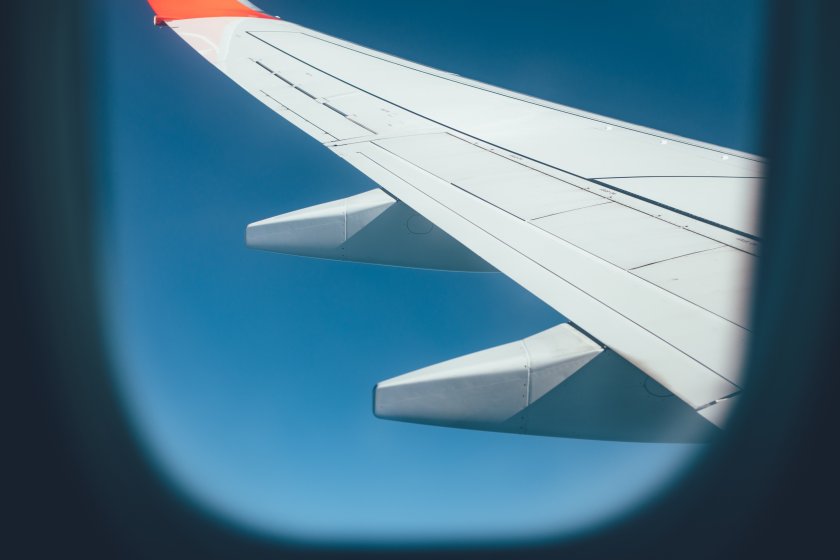
All the flights I took between Sydney and Glasgow already had me thinking about the future of aviation. Were batteries too heavy, was hydrogen insufficiently energy dense? I want to be a good global citizen but my country is vast and the places I love are far away from each other. My passion for rehabilitating injured wild birds gives me a working knowledge of the conflicting demands of flight. My father, who studied aeronautical engineering, always made us sit in the part of a plane where the wings joined onto the body, because he said it was the strongest and therefore the safest, never mind the obstructed views. Then, a Glasgow Worldcon talk on practical applications of magnetism gave me a jet with body and wings held together by magnetic fields.
I don’t work in a research or academic arena where I’m constantly made aware of how all our fields are interconnected. Glasgow Worldcon reminded me of that.
Crossing continents, especially when my flight paths detoured around war zones, already had me thinking about how fluctuations in sea level, ten thousand years ago and today, could swallow or uncover solid land for humans to fight and die for.
One month after Glasgow, I watched Xianzhi Cao/Ocean University’s viral video of 1.8 billion years of tectonic movements in reverse.
Geological timescales can be humbling. Some plates get eaten.
As for cell biology, the stages of meiosis that we all had to memorize back in high school, and how much we really have in common with our parents, I will leave to the young people of the story to decide.
But I hope they, and the rest of us, can look across what seems like divides wider than continents, decide that all human lives are of equal value, recognize that we are all in this together, and act for peace as well as for the climate, because what we have is worth saving.

